
EN
Birthplace of Karate
A path of etiquette and prayer, shaped in Ryukyu through harmony with heaven and earth
The Spirit of Ryukyu Karate
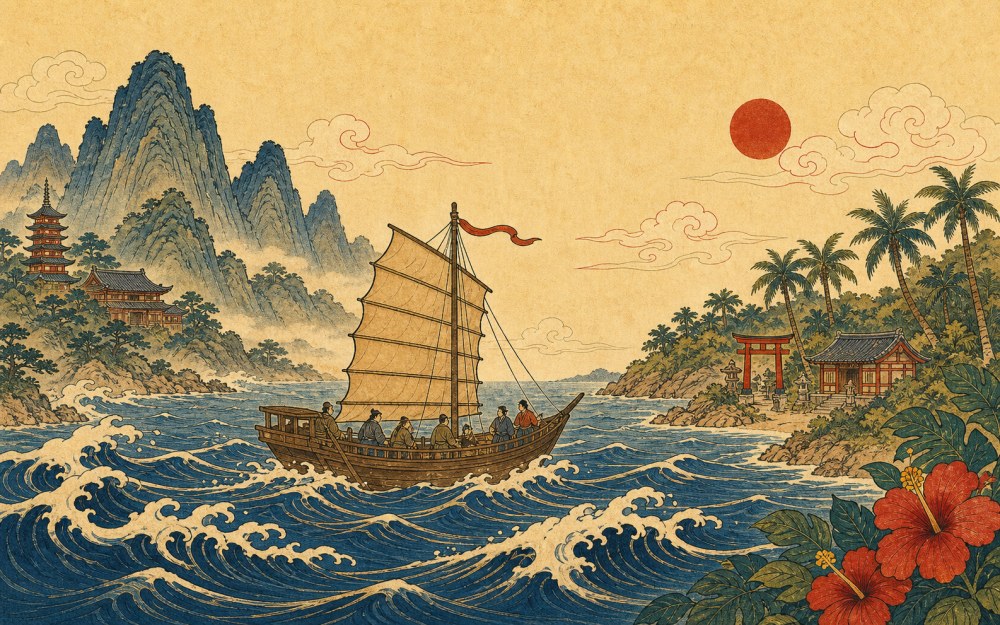
The roots of karate cannot be reduced to one theory or one place.
Martial arts that crossed the sea.
The old Ryukyu “te.”
Reverence for ancestors and respect for etiquette.
Prayer handed down within daily life.
These currents met in Okinawa, were refined, and grew into Okinawan karate.
At Okinogu, Ryukyu karate is received not merely as a technique for victory, but as a way to straighten the body, settle the breath, and clarify the heart.
Looking up to heaven, standing on the earth, and honoring people—in each gesture dwell respect, prayer, and a heart turned toward peace.
Traditions of Cultivating Body and Mind
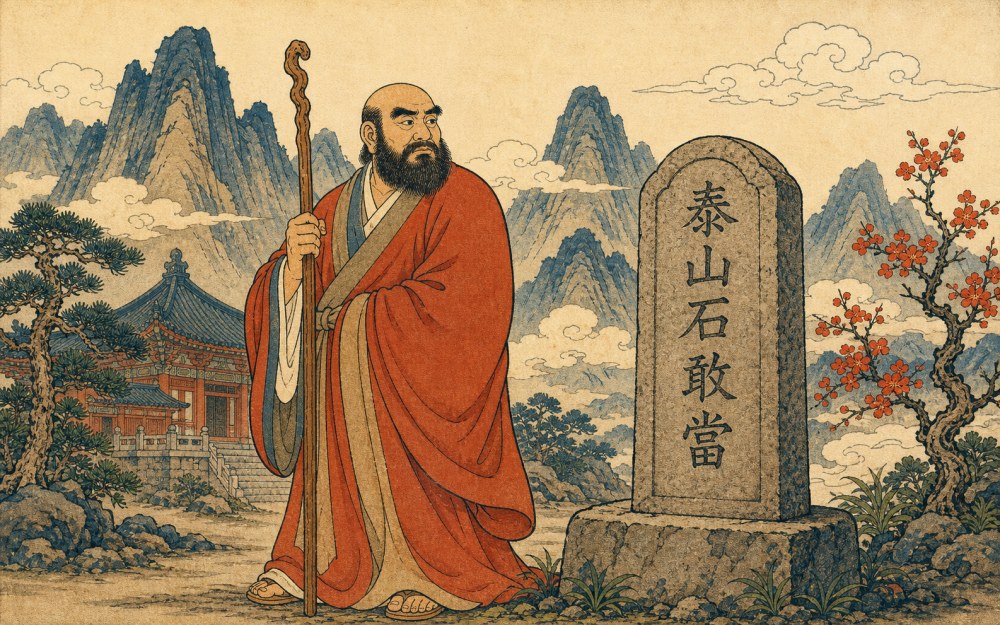
From ancient times, martial practice has been handed down not only as a technique for victory, but as training to straighten the body, settle the breath, and refine the heart.
Among the traditions that speak to the spiritual roots of karate is the story of Bodhidharma training his body, regulating his breath, and refining his spirit on Mount Tai in China. One tradition also tells that Bodhidharma sparred with an Ishiganto stone there.
The “Ishiganto” stones found throughout Okinawa have long been cherished as signs of protection that ward off misfortune and calm a place. The tradition of Ishiganto and the stories surrounding Bodhidharma tell us that martial practice was received not as mere fighting technique, but as a discipline to protect the body, purify a place, and harmonize body and mind.
Stories connected with Bodhidharma and Shaolin Temple also speak of training that forges the body, regulates the breath, and refines the spirit.
These traditions are not meant to fix karate’s origin in one place. Rather, they convey that martial practice has long been handed down as a way to harmonize with heaven and earth and to refine body and mind.
Martial practice begins by calming oneself first. Straightening the body, settling the breath, and clarifying the heart—this spirit runs deeply through the etiquette and prayer of karate nurtured in Ryukyu.
Across the Sea to Ryukyu
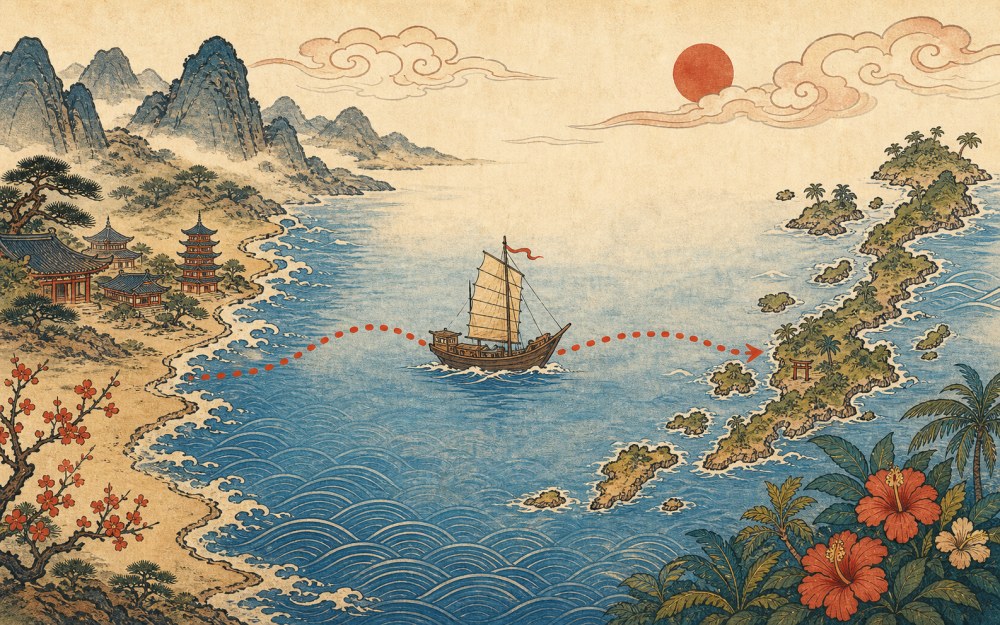
Ryukyu was a kingdom opened by the sea.
Through exchange with China and the southern seas, and through the history of investiture and trade, many martial arts and bodily cultures reached Ryukyu.
What arrived did not remain unchanged. It was received within Ryukyu’s climate, faith, and manners, and was refined as the martial art of this land.
The sea was not only a boundary. It was also a path that connected people, carried culture, and linked prayers.
The currents of martial practice that came through that sea path became the foundation of Okinawan karate.
A Martial Way of Etiquette and Prayer
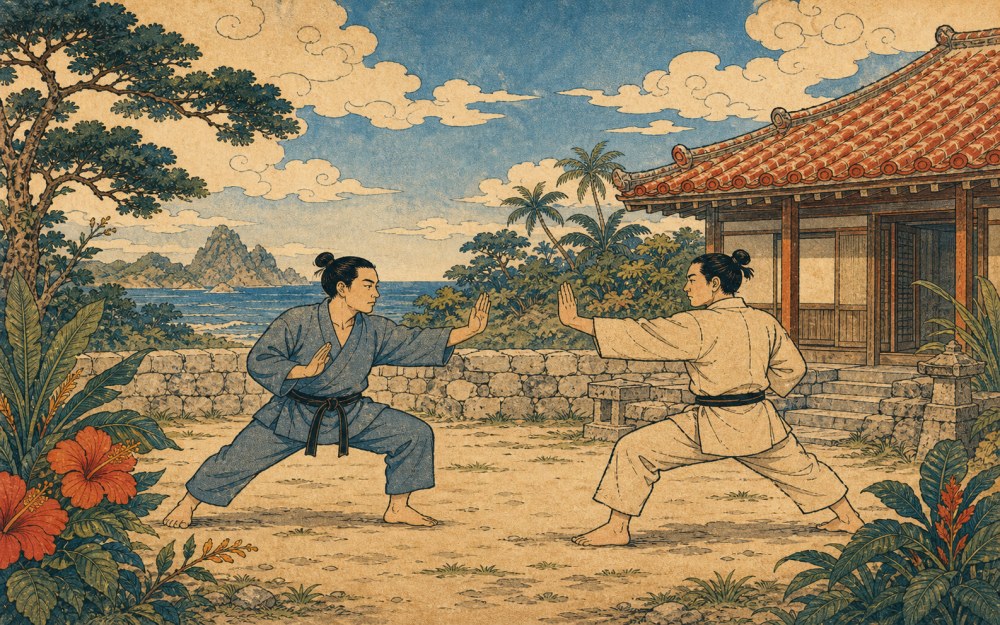
In Ryukyu there was a heart that honored ancestors, valued etiquette, and placed prayer within daily life.
There, martial practice that crossed the sea met the “te” long transmitted in Okinawa.
Shuri-te, Naha-te, Tomari-te, and Tode—each stream was refined in this land and eventually led to karate.
Before being a technique to defeat another, Okinawan karate is a way to correct one’s own posture. In one bow there is prayer; in one kata there is a heart inherited from the ancestors.
To refine technique is to refine the heart. To train the body is also to set one’s path as a human being in order.
Sun, Moon, and Mirror
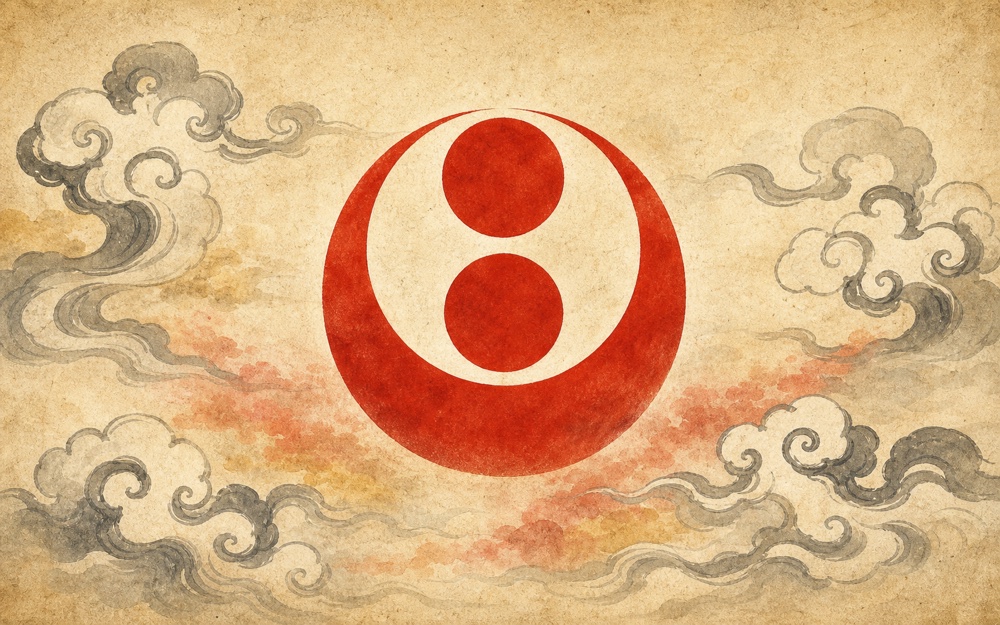
The crest of Okinogu is the Sun, the Moon, and the Mirror.
The Sun is light from heaven. The Moon receives that light and creates movement and cycle. The Mirror reflects one’s own heart and serves as a sign of correction.
Looking up to heaven, standing on the earth, and honoring people—the gestures of Ryukyu karate quietly reveal the spirit of heaven, earth, and humanity in harmony.
Under the light of the Sun, straighten the body. Like the cycle of the Moon, settle the breath. As toward the Mirror, look again at one’s own heart.
The path of karate is also a path of refining the heart while polishing technique.
 Sun
Sun
The Sun is a sign of light from heaven. In karate, it corresponds to the work of straightening the body and making the path forward clear.
 Moon
Moon
The Moon is a sign of receiving light and creating cycle. In karate, it corresponds to the work of settling the breath and gently harmonizing the flow of body and mind.
 Mirror
The Mirror is a sign that reflects one’s own heart and corrects it. In karate, it corresponds to the heart that looks at oneself, guards against pride, and returns to etiquette and sincerity.
Busaaganashii, Deity of Martial Practice
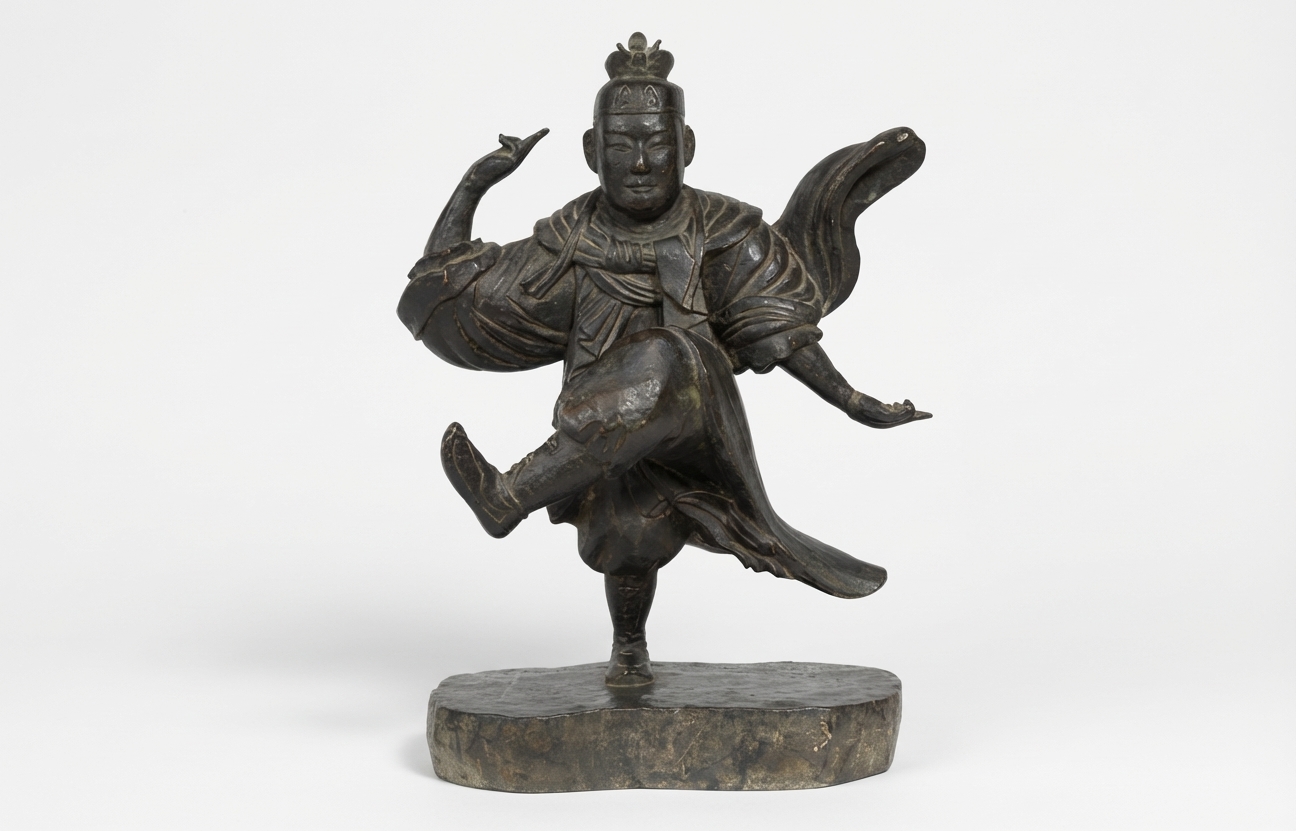
In Ryukyu karate, a prayerful figure called Busaaganashii is handed down as a deity who guards and guides martial practice.
Its roots are said to lie in “Kutem Fukka-in Santato Gensui,” depicted in the Okinawan martial text Bubishi. In Fuzhou, Fujian, this deity is also said to have been enshrined both as a protector of the performing arts and as a protector of martial arts.
As dance can be offered before the divine, martial practice can also become a prayer that offers technique and heart before the divine.
Straightening the body, settling the breath, and clarifying the heart in one bow—in that gesture, martial practice becomes not a force for conflict, but a path to correct oneself and protect others.
Through prayer to Busaaganashii, Okinogu carefully transmits the spirit of etiquette and prayer that dwells in Ryukyu karate.
Karate as Prayer
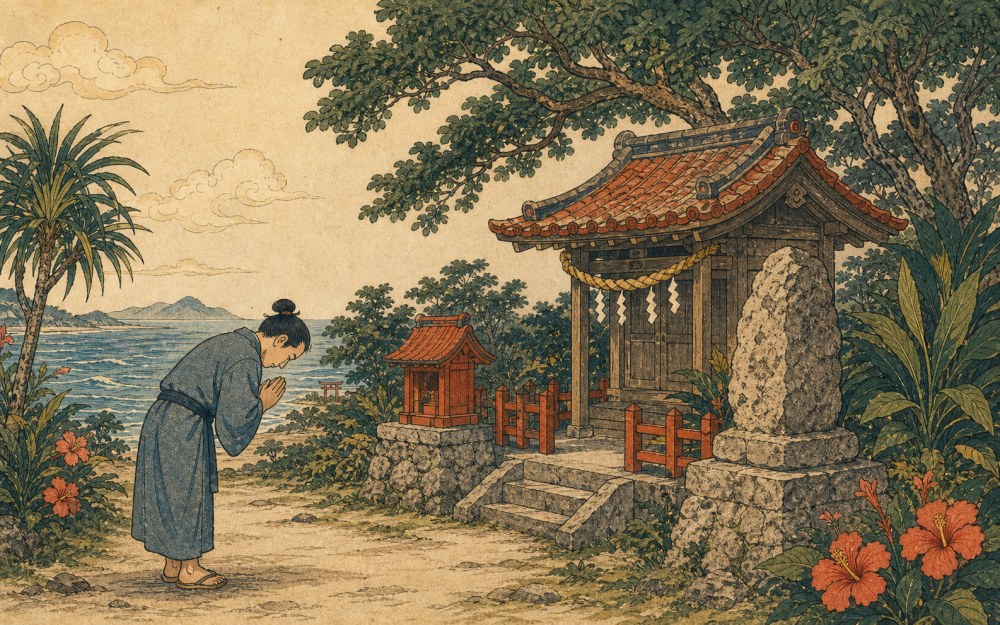
The true purpose of martial practice is not to spread conflict, but to cultivate a heart that calms conflict.
In the etiquette of Ryukyu karate there is respect for others; in each kata there is the work of correcting oneself; in quiet breathing there is a prayer not to begin conflict.
Looking up to heaven, standing on the earth, and honoring people—the accumulation of these gestures eventually nurtures a heart turned toward peace.
Karate is not only for boasting of strength. It is a path to harmonize the body, clarify the heart, show full etiquette, and give form to prayer.
Okinogu shares the spirit of etiquette and prayer that dwells in karate from Okinawa to the world, quietly and steadily.


